The Plott Hound - An Outstanding Native American Hound


Canine News
The Plott Hound - An Outstanding Native American Hound

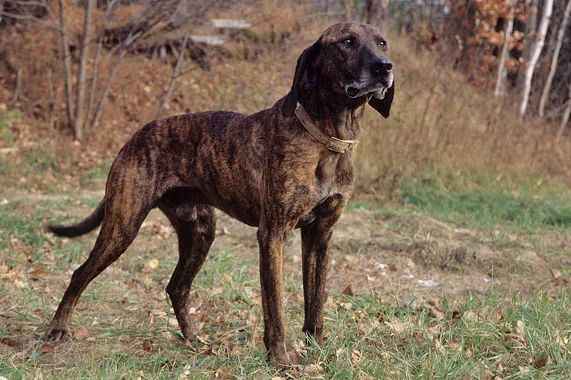
The Plott Hound is a large - sized hound breed that originated in the United States in the 18th century4. In 1750, Johannes Georg Plott, a German immigrant, brought five Schweisshunds to the United States. Through the cultivation of the Plott family for nearly 250 years, their descendants have become the present - day Plott Hounds4.


The Plott Hound is known for its intelligence, alertness, and confidence, with typical hound characteristics4. It is strong - bodied, with males standing 20 - 25 inches at the shoulder, females 20 - 23 inches, and weighing between 40 - 60 pounds1. Its coat is short and smooth, with a variety of colors, mainly various brindle colors such as yellow, red, chocolate, and blue brindle, and occasionally buckskin1.


Traditionally, this breed is used for tracking and hunting large - game animals. It shows tenacity, agility, and courage in hunting4. It is loyal to its owner and cautious with strangers, but after good socialization training, it can get along well with people and other animals1. The Plott Hound requires a lot of exercise and loves swimming, making it an excellent outdoor companion1. However, due to its gulping eating habit, it may face health problems such as gastric torsion4.


In the United States, the Plott Hound is mainly distributed in the Appalachian Mountains, the Blue Ridge region, and the Great Smoky Mountains in the east. Although it is more common in the southern states, it is relatively rare in other parts of the United States and is usually not kept as a single pet4. In 2007, the American Kennel Club officially included it in the Hound Group, which has brought it wider recognition4
Latest Stories
Feline News2 minute readOriginating from the northwestern United States, the Pixiebob Longhair has captivated cat enthusiasts worldwide with its striking resemblance to the wild bobcat and its loyal, affectionate nature. As the long-haired variant of the Pixiebob breed, this "native new breed"—recognized by The International Cat Association (TICA)—boasts a robust physique, luxurious silky coat, and a uniquely bobbed tail, earning accolades in international cat shows.
Animal Information1 minute readOriginating in Hungary, the Komondor is a muscular large breed renowned as a fearless guardian. Historically tasked with protecting herds from wolves, this agile canine now serves as a devoted family guard dog, blending loyalty with a distinctive appearance that earned it a quirky nickname.
Feline News2 minute readThe Turkish Angora, a breed steeped in history and elegance, has captivated hearts for centuries with its striking appearance and regal demeanor. Originating from Ankara, Turkey (formerly Angora), this ancient longhair breed is believed to be the ancestor of many modern longhaired cats. Once on the brink of extinction, it was saved by dedicated conservation efforts, including a 1930s breeding program initiated by the Turkish government, which focused on preserving the iconic white-coated variety. Today, it stands as a national treasure, celebrated for its beauty and cultural significance.
Animal Information1 minute readThe humphead wrasse (Cheilinus undulatus), a majestic marine species, remains listed as endangered, facing ongoing threats to its survival in global oceans. Renowned for its impressive size, adult individuals can reach a staggering weight of 180 kilograms, making it one of the largest reef-dwelling fish in the world.
Feline News1 minute readThe Balinese cat, also known as the Bali cat or Java cat, is a charming medium - sized long - haired cat. It originated in the United States and is a long - haired mutant of the Siamese cat. It is named the Balinese cat because its movements are 酷似 those of the native Balinese dancers.
Animal Information1 minute readThe global population of Bengal tigers currently stands at approximately 24,000, but a closer look at the figures reveals a worrying reality: only around 3,200 of these majestic creatures live in their natural wild habitats, while nearly 20,000 are in captivity. This stark contrast becomes even more alarming when compared to historical records.
Animal Information1 minute readThe Atossa fritillary (Speyeria adiaste atossa), a butterfly once common in Southern California’s mountain regions, is feared extinct, with no confirmed sightings since 1959. Characterized by its broad wings decorated with elegant black spots, the species once thrived across the area’s rugged landscapes.