The Glasswing Butterfly: Nature’s Transparent Wonder with a Survival Strategy


Animal Information
The Glasswing Butterfly: Nature’s Transparent Wonder with a Survival Strategy

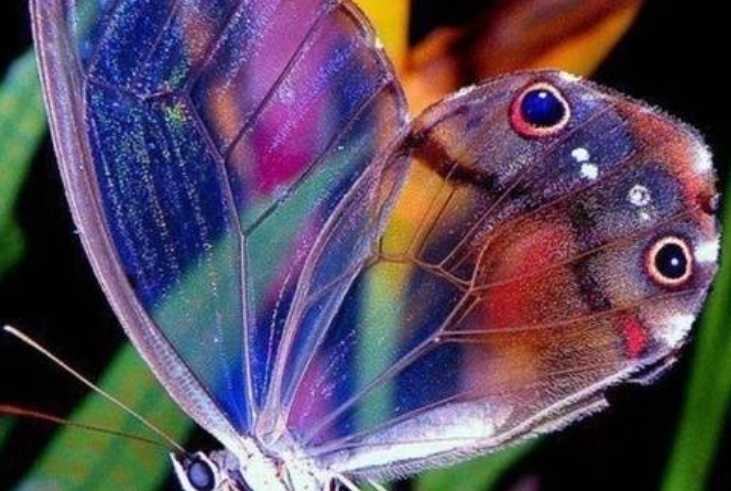
Native to the tropical rainforests of Central and South America, the glasswing butterfly (Greta oto) has captivated scientists and nature enthusiasts with its most iconic feature—wings so transparent they appear nearly invisible in flight. This remarkable adaptation allows it to vanish mid-air, making it a living example of nature’s evolutionary ingenuity.

Transparency as Camouflage: Physical Adaptations

The glasswing’s wings lack the colored scales found in most butterflies, instead featuring a membrane of clear chitin with tiny, irregular nanostructures that scatter light minimally. This creates a glass-like effect, allowing the butterfly to blend into sunlit foliage or disappear against the sky. Bordered by dark, reddish-brown veins, the wings span 5–6 cm, with the body sporting a fuzzy, brownish hue. Unlike other butterflies, it relies on transparency rather than bright colors for defense, a strategy that thrives in its dense forest habitat where predators like birds struggle to spot moving glassy wings.

Life Cycle and Ecological Role

Caterpillars of the glasswing butterfly feed on toxic plants in the nightshade family, absorbing compounds that make them unpalatable to predators—a trait retained in adulthood. Adults nectar on flowers like Lantana, aiding in pollination while using their transparent wings to navigate between blooms undetected. They are most active during the day, fluttering slowly to minimize wing movement and maintain invisibility. Though not currently endangered, their rainforest habitat faces threats from deforestation and climate change, which could disrupt their delicate life cycle.

Scientific Inspiration and Cultural Significance

The glasswing’s transparent wings have inspired materials science, with researchers studying their nanostructures to develop anti-reflective coatings for solar panels and electronics. In Central American folklore, the butterfly is often seen as a symbol of transformation and adaptability. Today, it serves as a flagship species for rainforest conservation, reminding humanity of the countless unique creatures that rely on intact ecosystems for survival—creatures whose beauty lies not in opulence, but in the elegant simplicity of evolutionary design.
Latest Stories
Feline News2 minute readOriginating from the northwestern United States, the Pixiebob Longhair has captivated cat enthusiasts worldwide with its striking resemblance to the wild bobcat and its loyal, affectionate nature. As the long-haired variant of the Pixiebob breed, this "native new breed"—recognized by The International Cat Association (TICA)—boasts a robust physique, luxurious silky coat, and a uniquely bobbed tail, earning accolades in international cat shows.
Animal Information1 minute readOriginating in Hungary, the Komondor is a muscular large breed renowned as a fearless guardian. Historically tasked with protecting herds from wolves, this agile canine now serves as a devoted family guard dog, blending loyalty with a distinctive appearance that earned it a quirky nickname.
Feline News2 minute readThe Turkish Angora, a breed steeped in history and elegance, has captivated hearts for centuries with its striking appearance and regal demeanor. Originating from Ankara, Turkey (formerly Angora), this ancient longhair breed is believed to be the ancestor of many modern longhaired cats. Once on the brink of extinction, it was saved by dedicated conservation efforts, including a 1930s breeding program initiated by the Turkish government, which focused on preserving the iconic white-coated variety. Today, it stands as a national treasure, celebrated for its beauty and cultural significance.
Animal Information1 minute readThe humphead wrasse (Cheilinus undulatus), a majestic marine species, remains listed as endangered, facing ongoing threats to its survival in global oceans. Renowned for its impressive size, adult individuals can reach a staggering weight of 180 kilograms, making it one of the largest reef-dwelling fish in the world.
Feline News1 minute readThe Balinese cat, also known as the Bali cat or Java cat, is a charming medium - sized long - haired cat. It originated in the United States and is a long - haired mutant of the Siamese cat. It is named the Balinese cat because its movements are 酷似 those of the native Balinese dancers.
Animal Information1 minute readThe global population of Bengal tigers currently stands at approximately 24,000, but a closer look at the figures reveals a worrying reality: only around 3,200 of these majestic creatures live in their natural wild habitats, while nearly 20,000 are in captivity. This stark contrast becomes even more alarming when compared to historical records.
Animal Information1 minute readThe Atossa fritillary (Speyeria adiaste atossa), a butterfly once common in Southern California’s mountain regions, is feared extinct, with no confirmed sightings since 1959. Characterized by its broad wings decorated with elegant black spots, the species once thrived across the area’s rugged landscapes.