Scientists Warn: 'Living Crystal' Buckley's Glass Frog Faces Extinction in Amazon Rainforest


Animal Information
Scientists Warn: 'Living Crystal' Buckley's Glass Frog Faces Extinction in Amazon Rainforest

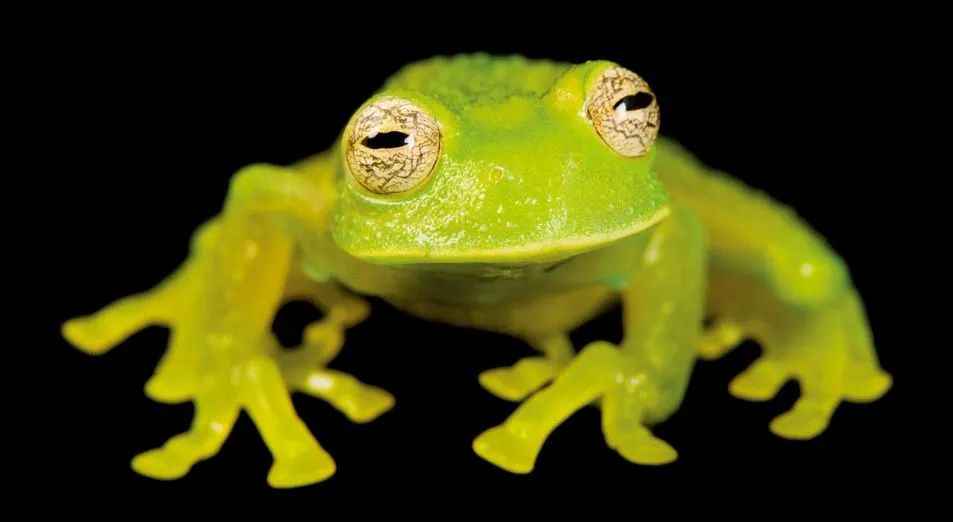
Deep in the mist-shrouded cloud forests of the Andes, a frog with a body as transparent as glass teeters on the brink of crisis. The Buckley's glass frog (Centrolene buckleyi) is renowned for its translucent abdomen, where its beating heart, digestive system, and bones are visible—a natural "living dissection." However, the International Union for Conservation of Nature (IUCN) has classified this species as Vulnerable, with wild populations collapsing due to habitat destruction and illegal trade.

The Evolutionary Enigma of Transparency
Measuring 2.5-7.5 cm in length, the frog's lack of pigmentation in its abdominal skin exposes internal organs through tissue thinner than a human hair. This "invisibility" is an evolutionary adaptation: the green dorsal surface blends with leaves, while the transparent belly minimizes shadows, making the frog nearly undetectable to predators. As ecosystem "canaries," glass frogs' survival mirrors rainforest health—they rely on high humidity and are hypersensitive to climate change and pollution.

Triple Threats: Habitat Loss, Trafficking, and Climate Change

  1. Deforestation & Agricultural Expansion
    Found in Colombia, Ecuador, and Peru, the frog's cloud forest habitat is shrinking at 1.5% annually. Logging, coffee plantations, and mining have fragmented habitats, isolating populations into "ecological islands".
  2. Illegal Pet Trade
    In 2022, Costa Rica intercepted smuggling rings targeting glass frogs alongside orchids and poison dart frogs. Live specimens, hidden in electronics or food packaging, are trafficked to Germany and the U.S., with single shipments yielding profits up to $50,000. Shanghai Customs seized a batch of Centrolene frogs in March 2025, including close relatives of C. buckleyi.
  3. Climate-Driven Droughts
    A 1.2°C temperature rise in the Andes over the past decade has reduced cloud forest humidity by 30%. Frogs now lay eggs prematurely, with tadpole mortality increasing by 60% in arid conditions.

Conservation Efforts & Scientific Breakthroughs

  • CITES Protection:All glass frog species were listed under CITES Appendix II in 2022, requiring strict trade controls.
  • IFAW's Rescue Program:The International Fund for Animal Welfare (IFAW) launched the "Andean Amphibian Corridor" in 2025, establishing 3 reserves in Ecuador. Over 200 juveniles have been successfully reintroduced.
  • Taxonomic Revision:A 2024 PeerJ study revealed that C. buckleyi is part of a species complex containing multiple unnamed lineages, two of which are now Endangered. This discovery necessitates tailored conservation strategies for each lineage.

Critical Status: From Vulnerable to the Brink

With less than 500 km² of core habitat remaining—and 80% unprotected—the IUCN warns the species could be reclassified as Critically Endangered within 20 years. "Their transparency is not just a marvel—it's a warning," says Dr. Maria Gonzalez of IBMC. "Saving these frogs means saving the rainforest's biological legacy."


Take Action:Support the Rainforest Protection Alliance's "Adopt a Tree" program or IFAW's Glass Frog Watch (www.glassfrogwatch.org) to contribute to conservation efforts.
Latest Stories
Feline News2 minute readOriginating from the northwestern United States, the Pixiebob Longhair has captivated cat enthusiasts worldwide with its striking resemblance to the wild bobcat and its loyal, affectionate nature. As the long-haired variant of the Pixiebob breed, this "native new breed"—recognized by The International Cat Association (TICA)—boasts a robust physique, luxurious silky coat, and a uniquely bobbed tail, earning accolades in international cat shows.
Animal Information1 minute readOriginating in Hungary, the Komondor is a muscular large breed renowned as a fearless guardian. Historically tasked with protecting herds from wolves, this agile canine now serves as a devoted family guard dog, blending loyalty with a distinctive appearance that earned it a quirky nickname.
Feline News2 minute readThe Turkish Angora, a breed steeped in history and elegance, has captivated hearts for centuries with its striking appearance and regal demeanor. Originating from Ankara, Turkey (formerly Angora), this ancient longhair breed is believed to be the ancestor of many modern longhaired cats. Once on the brink of extinction, it was saved by dedicated conservation efforts, including a 1930s breeding program initiated by the Turkish government, which focused on preserving the iconic white-coated variety. Today, it stands as a national treasure, celebrated for its beauty and cultural significance.
Animal Information1 minute readThe humphead wrasse (Cheilinus undulatus), a majestic marine species, remains listed as endangered, facing ongoing threats to its survival in global oceans. Renowned for its impressive size, adult individuals can reach a staggering weight of 180 kilograms, making it one of the largest reef-dwelling fish in the world.
Feline News1 minute readThe Balinese cat, also known as the Bali cat or Java cat, is a charming medium - sized long - haired cat. It originated in the United States and is a long - haired mutant of the Siamese cat. It is named the Balinese cat because its movements are 酷似 those of the native Balinese dancers.
Animal Information1 minute readThe global population of Bengal tigers currently stands at approximately 24,000, but a closer look at the figures reveals a worrying reality: only around 3,200 of these majestic creatures live in their natural wild habitats, while nearly 20,000 are in captivity. This stark contrast becomes even more alarming when compared to historical records.
Animal Information1 minute readThe Atossa fritillary (Speyeria adiaste atossa), a butterfly once common in Southern California’s mountain regions, is feared extinct, with no confirmed sightings since 1959. Characterized by its broad wings decorated with elegant black spots, the species once thrived across the area’s rugged landscapes.