The Platypus: Australia’s Bizarre 'Duck-Billed' Mammal, a Living Evolutionary Enigma


Animal Information
The Platypus: Australia’s Bizarre 'Duck-Billed' Mammal, a Living Evolutionary Enigma

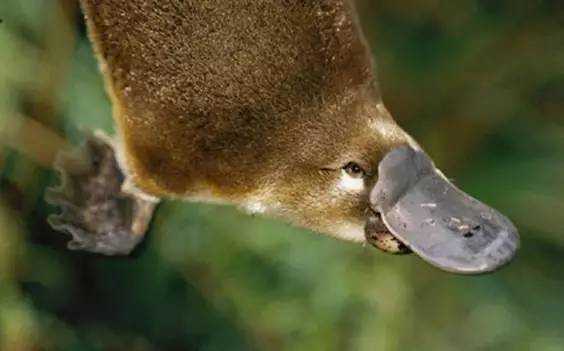
Native to the freshwater rivers of eastern Australia, the platypus (Ornithorhynchus anatinus) stands as one of the world’s most extraordinary creatures—an odd blend of mammalian, reptilian, and avian traits that baffled scientists when first discovered. Often called a "living fossil," this semiaquatic mammal lays eggs, produces milk, and sports a duck-like bill, making it a unique representative of the ancient monotreme order.


A Hodgepodge of Adaptations: Form and Function

The platypus’s most iconic feature is its rubbery, duck-shaped bill, which is equipped with electroreceptors to detect prey (shrimp, worms, and insects) in murky water. Its body is covered in dense, waterproof fur (ranging from dark brown to light tan), with webbed feet that fold back on land to reveal clawed digits for digging. Males possess venomous spurs on their hind legs, a rare trait among mammals, used in territorial disputes. Growing up to 50 centimeters in length and weighing 1–2 kilograms, it has a flat, beaver-like tail that stores fat and aids in swimming. Despite its mammalian classification, it lacks teats; instead, milk seeps through skin glands, a primitive trait linking it to reptilian ancestors.
 
 
Source: Images from the Internet, if there is any infringement, please contact the removal of


Nocturnal Lifestyle and Conservation Challenges

Primarily nocturnal, the platypus spends its days in burrows along riverbanks and forages at night, using its bill to sweep the riverbed for food. It is a solitary creature, except during the breeding season, when females lay 1–2 leathery eggs and incubate them in their burrows. Once thought common, the platypus is now listed as "Vulnerable" in parts of its range, facing threats from habitat destruction, pollution, droughts, and climate change. River degradation from agriculture and urbanization disrupts its feeding grounds, while dams alter water flow and fragment populations. Conservation groups in Australia, such as the Platypus Conservation Initiative, work to restore river health and raise awareness about this unique mammal’s ecological needs.

A Scientific Marvel and Cultural Icon

The platypus has long fascinated scientists, challenging traditional classifications of mammals. Its genome, a mix of mammalian, reptilian, and avian genes, provides insights into early vertebrate evolution. In Australian Aboriginal culture, it features in Dreamtime stories, symbolizing the duality of water and land. Today, it serves as an unofficial mascot for Australia’s biodiversity, appearing on coins and tourism campaigns. Yet its survival remains precarious—reminding humanity that even the most evolutionarily resilient species depend on intact ecosystems.


As a living link to Earth’s distant past, the platypus embodies nature’s capacity to defy expectation. Its strange form, a product of millions of years of adaptation, stands as a testament to the wonder and fragility of life—urging global efforts to protect the waterways it calls home before this evolutionary enigma becomes a relic of the past.
Latest Stories
Feline News2 minute readOriginating from the northwestern United States, the Pixiebob Longhair has captivated cat enthusiasts worldwide with its striking resemblance to the wild bobcat and its loyal, affectionate nature. As the long-haired variant of the Pixiebob breed, this "native new breed"—recognized by The International Cat Association (TICA)—boasts a robust physique, luxurious silky coat, and a uniquely bobbed tail, earning accolades in international cat shows.
Animal Information1 minute readOriginating in Hungary, the Komondor is a muscular large breed renowned as a fearless guardian. Historically tasked with protecting herds from wolves, this agile canine now serves as a devoted family guard dog, blending loyalty with a distinctive appearance that earned it a quirky nickname.
Feline News2 minute readThe Turkish Angora, a breed steeped in history and elegance, has captivated hearts for centuries with its striking appearance and regal demeanor. Originating from Ankara, Turkey (formerly Angora), this ancient longhair breed is believed to be the ancestor of many modern longhaired cats. Once on the brink of extinction, it was saved by dedicated conservation efforts, including a 1930s breeding program initiated by the Turkish government, which focused on preserving the iconic white-coated variety. Today, it stands as a national treasure, celebrated for its beauty and cultural significance.
Animal Information1 minute readThe humphead wrasse (Cheilinus undulatus), a majestic marine species, remains listed as endangered, facing ongoing threats to its survival in global oceans. Renowned for its impressive size, adult individuals can reach a staggering weight of 180 kilograms, making it one of the largest reef-dwelling fish in the world.
Feline News1 minute readThe Balinese cat, also known as the Bali cat or Java cat, is a charming medium - sized long - haired cat. It originated in the United States and is a long - haired mutant of the Siamese cat. It is named the Balinese cat because its movements are 酷似 those of the native Balinese dancers.
Animal Information1 minute readThe global population of Bengal tigers currently stands at approximately 24,000, but a closer look at the figures reveals a worrying reality: only around 3,200 of these majestic creatures live in their natural wild habitats, while nearly 20,000 are in captivity. This stark contrast becomes even more alarming when compared to historical records.
Animal Information1 minute readThe Atossa fritillary (Speyeria adiaste atossa), a butterfly once common in Southern California’s mountain regions, is feared extinct, with no confirmed sightings since 1959. Characterized by its broad wings decorated with elegant black spots, the species once thrived across the area’s rugged landscapes.