The Jewel Beetles (Buprestidae): Nature's Iridescent Gems


Insect Information
The Jewel Beetles (Buprestidae): Nature's Iridescent Gems

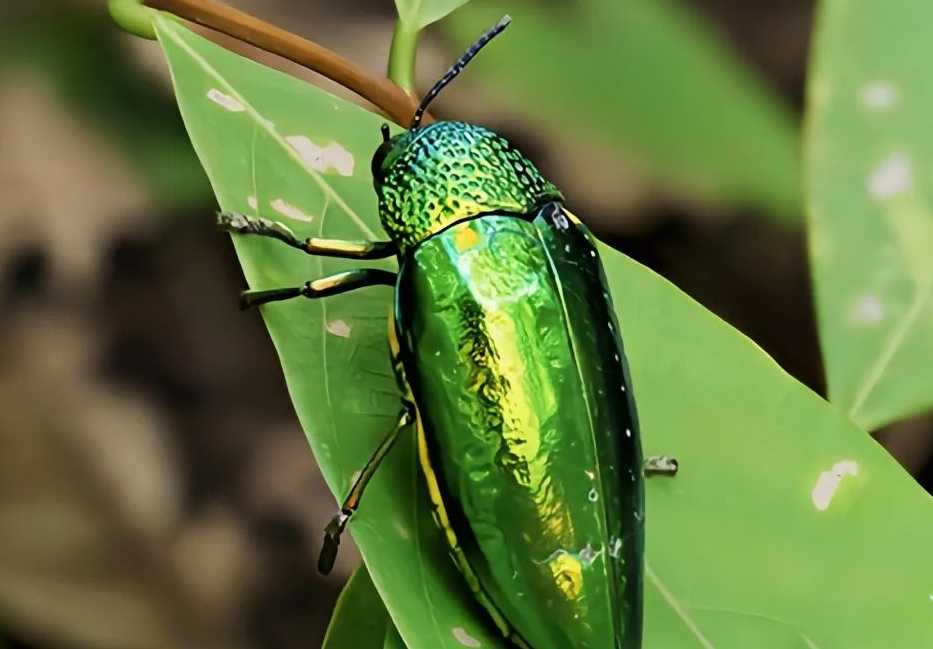
Jewel beetles, members of the family Buprestidae, are renowned for their exoskeletons that shimmer with metallic hues resembling emeralds, sapphires, and gold. This optical marvel arises from structural coloration—microscopic layers on their elytra that refract light, creating vibrant, fade - resistant iridescence. Found across Asia, Africa, and the Americas, these beetles have captivated humans for millennia with their gem - like appearance.


The Science of Structural Color
Unlike pigments, which fade over time, the beetles’ colors stem from nano - scale ridges and layers on their elytra. These structures interfere with light waves, producing hues that shift with viewing angles. For example, species like Chrysochroa fulgidissima display vivid green or blue sheens, while others may appear copper or purple. This adaptation serves dual purposes: camouflage among sunlit foliage and visual signaling during mating. The durability of these colors—remaining vibrant even after the beetle’s death—has made them prized materials for decorative arts.


Cultural Significance and Artistic Use
In Asia, jewel beetle elytra have been used in traditional crafts for centuries. Japanese * tamamono * (decorative art) and Thai * lai ruam mit * embroidery incorporate these iridescent scales to create elaborate patterns. In Myanmar and India, they adorn headdresses, jewelry, and religious artifacts, symbolizing wealth and prosperity. The beetles’ resistance to fading made them valuable substitutes for precious gems in pre - industrial societies. Even today, their wings inspire contemporary fashion and jewelry designs, blending nature’s artistry with human creativity.


Ecological Roles and Modern Research
In ecosystems, jewel beetles play vital roles as pollinators and decomposers. Larvae bore into trees, aiding in wood decay and nutrient cycling, while adults feed on nectar and foliage. Their structural coloration has also become a focus of scientific study: researchers analyze the nano - architecture of their exoskeletons to develop sustainable iridescent materials, energy - efficient optical devices, and even anti - counterfeiting technologies. By mimicking the beetles’ light - manipulating structures, scientists hope to create eco - friendly alternatives to synthetic dyes and pigments.


From ancient adornments to cutting - edge biomimicry, jewel beetles exemplify the intersection of natural beauty and human ingenuity. Their iridescent wings, a product of millions of years of evolution, serve as both a reminder of Earth’s biodiversity and a source of inspiration for sustainable innovation. As we continue to unlock the secrets of their "optical code," these living gems remind us of the infinite wonders hidden in the insect world.
Latest Stories
Feline News2 minute readOriginating from the northwestern United States, the Pixiebob Longhair has captivated cat enthusiasts worldwide with its striking resemblance to the wild bobcat and its loyal, affectionate nature. As the long-haired variant of the Pixiebob breed, this "native new breed"—recognized by The International Cat Association (TICA)—boasts a robust physique, luxurious silky coat, and a uniquely bobbed tail, earning accolades in international cat shows.
Animal Information1 minute readOriginating in Hungary, the Komondor is a muscular large breed renowned as a fearless guardian. Historically tasked with protecting herds from wolves, this agile canine now serves as a devoted family guard dog, blending loyalty with a distinctive appearance that earned it a quirky nickname.
Feline News2 minute readThe Turkish Angora, a breed steeped in history and elegance, has captivated hearts for centuries with its striking appearance and regal demeanor. Originating from Ankara, Turkey (formerly Angora), this ancient longhair breed is believed to be the ancestor of many modern longhaired cats. Once on the brink of extinction, it was saved by dedicated conservation efforts, including a 1930s breeding program initiated by the Turkish government, which focused on preserving the iconic white-coated variety. Today, it stands as a national treasure, celebrated for its beauty and cultural significance.
Animal Information1 minute readThe humphead wrasse (Cheilinus undulatus), a majestic marine species, remains listed as endangered, facing ongoing threats to its survival in global oceans. Renowned for its impressive size, adult individuals can reach a staggering weight of 180 kilograms, making it one of the largest reef-dwelling fish in the world.
Feline News1 minute readThe Balinese cat, also known as the Bali cat or Java cat, is a charming medium - sized long - haired cat. It originated in the United States and is a long - haired mutant of the Siamese cat. It is named the Balinese cat because its movements are 酷似 those of the native Balinese dancers.
Animal Information1 minute readThe global population of Bengal tigers currently stands at approximately 24,000, but a closer look at the figures reveals a worrying reality: only around 3,200 of these majestic creatures live in their natural wild habitats, while nearly 20,000 are in captivity. This stark contrast becomes even more alarming when compared to historical records.
Animal Information1 minute readThe Atossa fritillary (Speyeria adiaste atossa), a butterfly once common in Southern California’s mountain regions, is feared extinct, with no confirmed sightings since 1959. Characterized by its broad wings decorated with elegant black spots, the species once thrived across the area’s rugged landscapes.