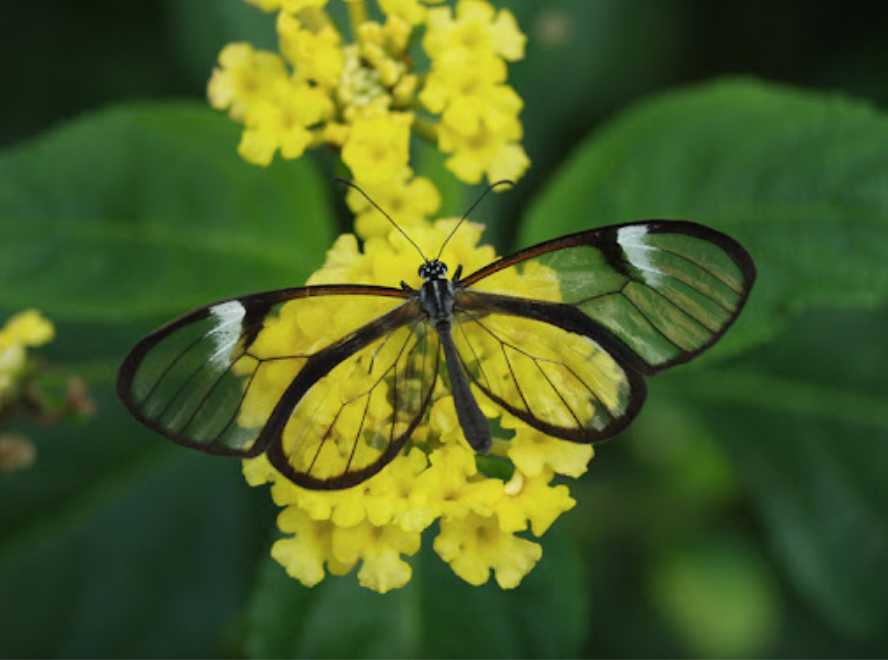
The Glasswing Butterfly: Nature’s Transparent Wonder Hunted for Its Elusive Beauty


Insect Information
The Glasswing Butterfly: Nature’s Transparent Wonder Hunted for Its Elusive Beauty

Scientifically named Greta oto, the glasswing butterfly belongs to the family Nymphalidae, subfamily Danainae, tribe Ithomiini, and subtribe Gretae. Renowned for its ethereal, translucent wings, this Central and South American species has evolved a survival strategy that paradoxically draws human attention—turning its natural defense against predators into a curse.


Transparency as a Survival Mechanism

The glasswing’s wings are nearly invisible in flight, thanks to a lack of pigmentation and a membrane so thin it scatters minimal light. This "crystal clear" design allows it to blend with sunlit foliage, evading birds and insects that rely on vision to hunt. Veins reinforced with chitin provide structural support, while tiny bumps on the wing surface reduce light reflection, enhancing transparency.


Native to rainforests from Mexico to Panama, the butterfly thrives in forest edges and gardens. Its caterpillars feed on toxic plants like Cestrum, storing alkaloids in their bodies to deter predators—a trait shared by many clear-winged butterflies. Adults sip nectar from flowers, using their transparency to approach blooms undetected.

From Natural Adaptation to Human Target

While transparency evolved to avoid predation, the glasswing’s unique appearance has made it a prized specimen for collectors and a symbol in art and fashion. Illegal trafficking of its wings, often used in jewelry or decor, threatens local populations. Additionally, habitat loss from deforestation and climate change compounds risks, as the butterfly relies on specific host plants for reproduction.


Conservationists emphasize the need to protect its ecosystem rather than targeting the species alone. Organizations like the Rainforest Alliance promote sustainable tourism, where visitors can observe glasswings in the wild without disturbing them. Scientifically, the butterfly’s wing structure inspires innovations in optics and renewable energy, with researchers studying its anti-reflective properties for solar panel design.


In the lush canopies of the Neotropics, the glasswing butterfly embodies nature’s delicate balance: a creature whose survival hinges on invisibility, now forced to navigate human desire for its beauty. Its transparent wings serve as a reminder that even the most ingenious evolutionary traits offer no protection against human greed—and that preservation of wild spaces remains the only way to keep such wonders alight.
Latest Stories
Feline News2 minute readOriginating from the northwestern United States, the Pixiebob Longhair has captivated cat enthusiasts worldwide with its striking resemblance to the wild bobcat and its loyal, affectionate nature. As the long-haired variant of the Pixiebob breed, this "native new breed"—recognized by The International Cat Association (TICA)—boasts a robust physique, luxurious silky coat, and a uniquely bobbed tail, earning accolades in international cat shows.
Animal Information1 minute readOriginating in Hungary, the Komondor is a muscular large breed renowned as a fearless guardian. Historically tasked with protecting herds from wolves, this agile canine now serves as a devoted family guard dog, blending loyalty with a distinctive appearance that earned it a quirky nickname.
Feline News2 minute readThe Turkish Angora, a breed steeped in history and elegance, has captivated hearts for centuries with its striking appearance and regal demeanor. Originating from Ankara, Turkey (formerly Angora), this ancient longhair breed is believed to be the ancestor of many modern longhaired cats. Once on the brink of extinction, it was saved by dedicated conservation efforts, including a 1930s breeding program initiated by the Turkish government, which focused on preserving the iconic white-coated variety. Today, it stands as a national treasure, celebrated for its beauty and cultural significance.
Animal Information1 minute readThe humphead wrasse (Cheilinus undulatus), a majestic marine species, remains listed as endangered, facing ongoing threats to its survival in global oceans. Renowned for its impressive size, adult individuals can reach a staggering weight of 180 kilograms, making it one of the largest reef-dwelling fish in the world.
Feline News1 minute readThe Balinese cat, also known as the Bali cat or Java cat, is a charming medium - sized long - haired cat. It originated in the United States and is a long - haired mutant of the Siamese cat. It is named the Balinese cat because its movements are 酷似 those of the native Balinese dancers.
Animal Information1 minute readThe global population of Bengal tigers currently stands at approximately 24,000, but a closer look at the figures reveals a worrying reality: only around 3,200 of these majestic creatures live in their natural wild habitats, while nearly 20,000 are in captivity. This stark contrast becomes even more alarming when compared to historical records.
Animal Information1 minute readThe Atossa fritillary (Speyeria adiaste atossa), a butterfly once common in Southern California’s mountain regions, is feared extinct, with no confirmed sightings since 1959. Characterized by its broad wings decorated with elegant black spots, the species once thrived across the area’s rugged landscapes.