The Blue-Footed Booby: Galápagos’ Colorful Seabird with a Dashing Mating Dance


Animal Information
The Blue-Footed Booby: Galápagos’ Colorful Seabird with a Dashing Mating Dance

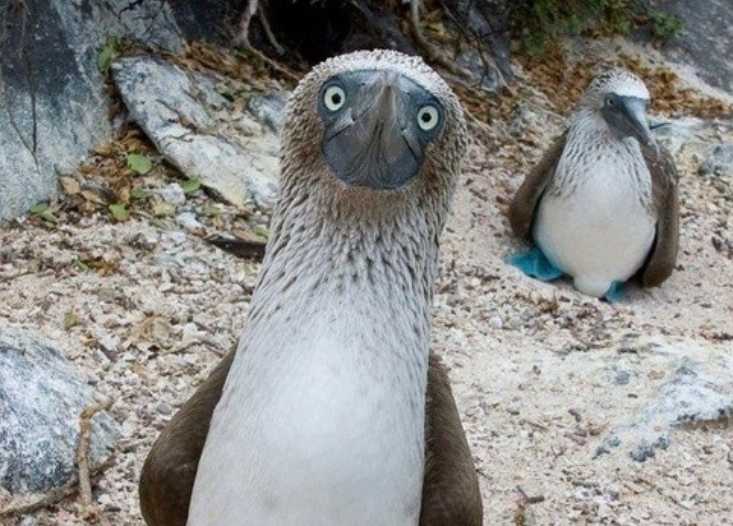
Native to the tropical and subtropical coasts of the eastern Pacific Ocean, the blue-footed booby (Sula nebouxii) is an iconic seabird best known for its most striking feature—bright blue feet that range from a pale turquoise to a vivid cobalt. Made famous by the Galápagos Islands, this charismatic bird has captivated scientists and nature lovers with its unique appearance and elaborate courtship rituals.

A Splash of Blue: Physical Traits and Adaptations

  • Feet as a Living Canvas
    The booby’s blue feet are no accident: their hue comes from carotenoid pigments in its diet of sardines and anchovies. Males typically sport brighter blue feet than females, a trait linked to reproductive fitness. Beyond aesthetics, the feet serve as efficient rudders while swimming and as stabilizers when landing on rocky cliffs.
  • Streamlined Seabird Structure
    Standing 70–90 cm tall with a wingspan of 1.5 meters, the booby has a white body, dark brown wings, and a long, pointed bill adapted for plunge-diving. Its webbed feet, though brilliantly colored, are also perfectly designed for propelling it through water when hunting fish. Juveniles lack the blue hue, developing it as they mature.

Romance on the Rocks: Mating Rituals and Lifestyle

  • The Foot-Flexing Courtship
    During mating season, males perform an elaborate dance: lifting their blue feet high in a slow, exaggerated march, spreading their wings, and calling out to impress females. The brighter the feet and the more energetic the display, the higher the chance of attracting a mate. Females lay 1–3 eggs, and both parents incubate them by resting their blue feet on the clutch to provide warmth.
  • Diving for Dinner
    Blue-footed boobies are exceptional hunters, plunging into the ocean from heights of up to 30 meters, using their sharp eyesight to spot fish below. They can even dive at angles that would disorient other birds, thanks to air sacs under their skin that cushion the impact. They often hunt in groups, herding fish into tight schools before attacking.

Conservation and Cultural Significance

Listed as "Least Concern" by the IUCN, the blue-footed booby faces threats from overfishing (which reduces prey), marine pollution, and introduced predators on nesting islands. In the Galápagos, conservation efforts focus on protecting nesting sites and monitoring population health. The bird’s quirky appearance has made it a symbol of the archipelago’s biodiversity, appearing in documentaries and tourism campaigns. Its blue feet, a blend of biological function and evolutionary showmanship, serve as a reminder of nature’s ability to turn practical traits into works of art—all in the name of love and survival.
Latest Stories
Feline News2 minute readOriginating from the northwestern United States, the Pixiebob Longhair has captivated cat enthusiasts worldwide with its striking resemblance to the wild bobcat and its loyal, affectionate nature. As the long-haired variant of the Pixiebob breed, this "native new breed"—recognized by The International Cat Association (TICA)—boasts a robust physique, luxurious silky coat, and a uniquely bobbed tail, earning accolades in international cat shows.
Animal Information1 minute readOriginating in Hungary, the Komondor is a muscular large breed renowned as a fearless guardian. Historically tasked with protecting herds from wolves, this agile canine now serves as a devoted family guard dog, blending loyalty with a distinctive appearance that earned it a quirky nickname.
Feline News2 minute readThe Turkish Angora, a breed steeped in history and elegance, has captivated hearts for centuries with its striking appearance and regal demeanor. Originating from Ankara, Turkey (formerly Angora), this ancient longhair breed is believed to be the ancestor of many modern longhaired cats. Once on the brink of extinction, it was saved by dedicated conservation efforts, including a 1930s breeding program initiated by the Turkish government, which focused on preserving the iconic white-coated variety. Today, it stands as a national treasure, celebrated for its beauty and cultural significance.
Animal Information1 minute readThe humphead wrasse (Cheilinus undulatus), a majestic marine species, remains listed as endangered, facing ongoing threats to its survival in global oceans. Renowned for its impressive size, adult individuals can reach a staggering weight of 180 kilograms, making it one of the largest reef-dwelling fish in the world.
Feline News1 minute readThe Balinese cat, also known as the Bali cat or Java cat, is a charming medium - sized long - haired cat. It originated in the United States and is a long - haired mutant of the Siamese cat. It is named the Balinese cat because its movements are 酷似 those of the native Balinese dancers.
Animal Information1 minute readThe global population of Bengal tigers currently stands at approximately 24,000, but a closer look at the figures reveals a worrying reality: only around 3,200 of these majestic creatures live in their natural wild habitats, while nearly 20,000 are in captivity. This stark contrast becomes even more alarming when compared to historical records.
Animal Information1 minute readThe Atossa fritillary (Speyeria adiaste atossa), a butterfly once common in Southern California’s mountain regions, is feared extinct, with no confirmed sightings since 1959. Characterized by its broad wings decorated with elegant black spots, the species once thrived across the area’s rugged landscapes.