The Axolotl: Mexico’s Remarkable 'Walking Fish' and Genetic Marvel


Animal Information
The Axolotl: Mexico’s Remarkable 'Walking Fish' and Genetic Marvel

Native to the freshwater lakes of Mexico City, the axolotl (Ambystoma mexicanum) is a salamander unlike any other—renowned for its permanent larval form, vibrant pinkish hue, and extraordinary regenerative abilities. Often called the "walking fish" due to its aquatic lifestyle, this critically endangered species has captivated scientists for centuries, serving as a key model in developmental biology.

Perpetual Youth and Regenerative Superpowers

  • Neoteny: Stuck in Adolescence
    Unlike most salamanders, axolotls never undergo metamorphosis, retaining gills, a tail fin, and larval features throughout their lives. This trait, called neoteny, allows them to reproduce while still in their larval stage, a rare adaptation in vertebrates.
  • Regrowth on Demand
    The axolotl’s most iconic ability is regrowing entire limbs, spinal cord segments, eyes, and even parts of the brain without scarring. Researchers have identified genes like Pax3 and Msx1 that drive this process, inspiring studies on human tissue regeneration. Their cells maintain a unique "memory" of original structures, guiding precise rebuilding.

Appearance and Cultural Significance

  • Distinctive Features
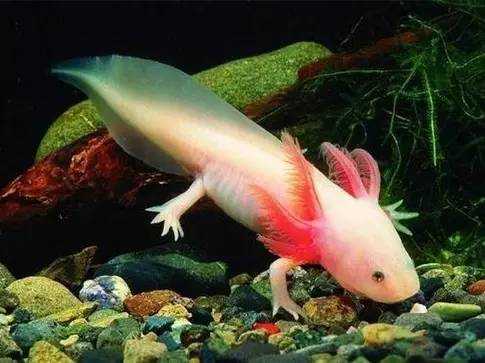
    With a stocky body reaching 20–30 cm, feathery external gills, and a wide, lidless smile, axolotls have a permanently juvenile appearance. Wild individuals are typically dark brown with gold speckles, while captive-bred ones range from albino pink to leucistic white. Their paddle-like feet allow them to "walk" along lake bottoms, hunting worms, insects, and small fish.
  • Aztec Roots and Modern Peril
    In Aztec culture, the axolotl was associated with the god Xolotl, symbolizing death and rebirth. Today, it faces existential threats: urbanization has drained its native lakes, invasive fish like tilapia prey on eggs, and water pollution disrupts its habitat. Once abundant in Lake Xochimilco, fewer than 1,000 individuals may remain in the wild, though thousands exist in laboratories and aquariums.

Scientific Hope and Conservation Efforts

  • Lab Star and Genetic Goldmine
    Axolotls were the first amphibians to have their genome sequenced (32 billion base pairs, 10 times larger than the human genome), revealing secrets of regeneration. Their cells are used to study cancer, spinal cord injuries, and aging.
  • Saving the 'Water Monster'
    Mexican conservationists are restoring wetland habitats, breeding axolotls in captivity for reintroduction, and educating locals about their importance. The species is listed as "Critically Endangered" by the IUCN, with organizations like the Axolotl Survival Consortium leading efforts to prevent its extinction.


As a living link to ancient Mexican ecosystems and a biological wonder, the axolotl embodies both the fragility and resilience of life. Its ability to regrow what’s lost serves as a metaphor for hope in conservation—and a reminder that even in the most urbanized corners of the world, nature’s miracles may still be saved.
Latest Stories
Feline News2 minute readOriginating from the northwestern United States, the Pixiebob Longhair has captivated cat enthusiasts worldwide with its striking resemblance to the wild bobcat and its loyal, affectionate nature. As the long-haired variant of the Pixiebob breed, this "native new breed"—recognized by The International Cat Association (TICA)—boasts a robust physique, luxurious silky coat, and a uniquely bobbed tail, earning accolades in international cat shows.
Animal Information1 minute readOriginating in Hungary, the Komondor is a muscular large breed renowned as a fearless guardian. Historically tasked with protecting herds from wolves, this agile canine now serves as a devoted family guard dog, blending loyalty with a distinctive appearance that earned it a quirky nickname.
Feline News2 minute readThe Turkish Angora, a breed steeped in history and elegance, has captivated hearts for centuries with its striking appearance and regal demeanor. Originating from Ankara, Turkey (formerly Angora), this ancient longhair breed is believed to be the ancestor of many modern longhaired cats. Once on the brink of extinction, it was saved by dedicated conservation efforts, including a 1930s breeding program initiated by the Turkish government, which focused on preserving the iconic white-coated variety. Today, it stands as a national treasure, celebrated for its beauty and cultural significance.
Animal Information1 minute readThe humphead wrasse (Cheilinus undulatus), a majestic marine species, remains listed as endangered, facing ongoing threats to its survival in global oceans. Renowned for its impressive size, adult individuals can reach a staggering weight of 180 kilograms, making it one of the largest reef-dwelling fish in the world.
Feline News1 minute readThe Balinese cat, also known as the Bali cat or Java cat, is a charming medium - sized long - haired cat. It originated in the United States and is a long - haired mutant of the Siamese cat. It is named the Balinese cat because its movements are 酷似 those of the native Balinese dancers.
Animal Information1 minute readThe global population of Bengal tigers currently stands at approximately 24,000, but a closer look at the figures reveals a worrying reality: only around 3,200 of these majestic creatures live in their natural wild habitats, while nearly 20,000 are in captivity. This stark contrast becomes even more alarming when compared to historical records.
Animal Information1 minute readThe Atossa fritillary (Speyeria adiaste atossa), a butterfly once common in Southern California’s mountain regions, is feared extinct, with no confirmed sightings since 1959. Characterized by its broad wings decorated with elegant black spots, the species once thrived across the area’s rugged landscapes.