The Albino Lion: Rare Genetic Marvel and Cultural Icon of the Savanna


Animal Information
The Albino Lion: Rare Genetic Marvel and Cultural Icon of the Savanna

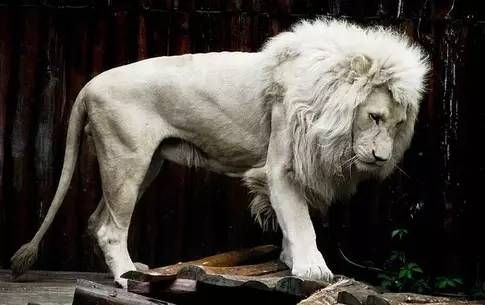
Albino lions, though often mistaken for white lions, are a distinct genetic rarity characterized by complete lack of melanin, resulting in pure white fur, pink skin, and pale blue or red eyes. Unlike white lions (which have a recessive color gene), albinism in lions is caused by a mutation in the TYR gene, inhibiting tyrosinase production—a enzyme crucial for pigment formation. These majestic creatures have captivated humanity for centuries, blending scientific curiosity with cultural mystique.

The Science Behind the Paleness: Genetic Anomalies

  • Pigmentation Breakdown
    Albino lions exhibit oculocutaneous albinism (OCA), a condition affecting both skin and eye pigment. Their white coat offers no camouflage, making hunting challenging, while light sensitivity (photophobia) from unpigmented eyes hinders vision in bright savanna sunlight. In the wild, albinism reduces survival rates, as cubs are more vulnerable to predators and struggle to hunt.
  • Physical Traits
    Aside from coloration, albino lions share typical lion anatomy: males grow up to 250 kg with a (white) mane, while females are smaller and maneless. Their rarity—estimated at 1 in 100,000 wild lions—makes them extremely scarce, with most sightings documented in southern Africa’s Kruger National Park and private reserves.

Cultural Significance and Conservation Realities

  • Myth vs. Reality
    In African folklore, albino lions are often seen as spiritual beings, symbols of luck or omens. The Tsonga people of South Africa refer to them as "ghost lions," believing they bridge the human and spirit worlds. However, this mystique has also fueled superstitions; in some regions, albino animals are hunted for use in traditional medicine, posing an additional threat.
  • Captive vs. Wild Survival
    Most albino lions today exist in captivity, where breeders sometimes exploit their rarity for tourism. Wild populations face dual risks: genetic inbreeding (as albinism requires two recessive genes) and habitat loss. Conservationists stress that while albino lions are fascinating, efforts must prioritize protecting overall lion populations, whose numbers have declined by 43% since 1993.


As living symbols of genetic wonder, albino lions highlight the fragility of nature’s diversity. Their existence challenges humanity to appreciate rarity not for exploitation, but as a reminder of the intricate web of life—where even the rarest mutations hold value in the grand tapestry of evolution.
Latest Stories
Feline News2 minute readOriginating from the northwestern United States, the Pixiebob Longhair has captivated cat enthusiasts worldwide with its striking resemblance to the wild bobcat and its loyal, affectionate nature. As the long-haired variant of the Pixiebob breed, this "native new breed"—recognized by The International Cat Association (TICA)—boasts a robust physique, luxurious silky coat, and a uniquely bobbed tail, earning accolades in international cat shows.
Animal Information1 minute readOriginating in Hungary, the Komondor is a muscular large breed renowned as a fearless guardian. Historically tasked with protecting herds from wolves, this agile canine now serves as a devoted family guard dog, blending loyalty with a distinctive appearance that earned it a quirky nickname.
Feline News2 minute readThe Turkish Angora, a breed steeped in history and elegance, has captivated hearts for centuries with its striking appearance and regal demeanor. Originating from Ankara, Turkey (formerly Angora), this ancient longhair breed is believed to be the ancestor of many modern longhaired cats. Once on the brink of extinction, it was saved by dedicated conservation efforts, including a 1930s breeding program initiated by the Turkish government, which focused on preserving the iconic white-coated variety. Today, it stands as a national treasure, celebrated for its beauty and cultural significance.
Animal Information1 minute readThe humphead wrasse (Cheilinus undulatus), a majestic marine species, remains listed as endangered, facing ongoing threats to its survival in global oceans. Renowned for its impressive size, adult individuals can reach a staggering weight of 180 kilograms, making it one of the largest reef-dwelling fish in the world.
Feline News1 minute readThe Balinese cat, also known as the Bali cat or Java cat, is a charming medium - sized long - haired cat. It originated in the United States and is a long - haired mutant of the Siamese cat. It is named the Balinese cat because its movements are 酷似 those of the native Balinese dancers.
Animal Information1 minute readThe global population of Bengal tigers currently stands at approximately 24,000, but a closer look at the figures reveals a worrying reality: only around 3,200 of these majestic creatures live in their natural wild habitats, while nearly 20,000 are in captivity. This stark contrast becomes even more alarming when compared to historical records.
Animal Information1 minute readThe Atossa fritillary (Speyeria adiaste atossa), a butterfly once common in Southern California’s mountain regions, is feared extinct, with no confirmed sightings since 1959. Characterized by its broad wings decorated with elegant black spots, the species once thrived across the area’s rugged landscapes.