Somali Wild Ass: East Africa’s Critically Endangered "Living Fossil" Faces Extinction Crisis


Animal Information
Somali Wild Ass: East Africa’s Critically Endangered "Living Fossil" Faces Extinction Crisis

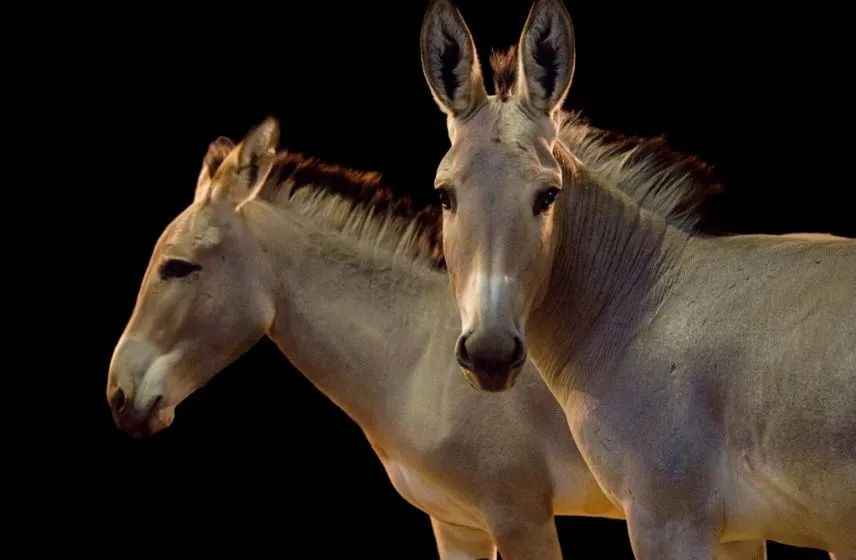
In the arid semi-deserts of the Horn of Africa lives an elegant and resilient creature—the Somali wild ass (Equus africanus somaliensis). As one of the wild ancestors of modern domestic donkeys, they once thrived in the dry grasslands and hills of Ethiopia, Eritrea, and Somalia. However, a combination of climate change, habitat loss, and human activities is pushing this species to the brink of extinction.

Survival Struggles: Double Jeopardy of Drought and Conflict

The Horn of Africa has experienced a marked increase in drought frequency and intensity over the past two decades, directly degrading the Somali wild ass’s habitat. Shrinking grasslands force them to compete with livestock for limited water and forage, exacerbating malnutrition and disease risks. For instance, the 2021 drought in northeastern Kenya killed at least 200 Somali giraffes, a fate mirrored in wild ass populations.


Warfare and communal conflicts further escalate threats. Illegal hunting persists due to weapon proliferation in parts of Somalia and Ethiopia, where their meat and body parts are sought for food and traditional medicine. Herders also kill them to protect livestock, while genetic purity is compromised by hybridization with domestic donkeys.

Ecological Value and Conservation Efforts

As a keystone species in arid ecosystems, Somali wild asses dig "ass wells" to access groundwater, inadvertently providing water sources for other animals and enhancing biodiversity. This behavior is critical amid desert expansion caused by climate change, even fostering plant seedling growth.


International efforts to save them include captive breeding and habitat protection. The UK’s Marwell Zoo recently celebrated a successful birth, offering hope for population survival. In Africa, Kenya’s Hirola Conservation Programme employs community collaboration, establishing reserves, providing emergency water, and combating diseases to balance wild ass and human needs. However, the IUCN Red List estimates fewer than 1,000 remain in the wild, with some sources suggesting less than 200, underscoring the urgency.

Future Outlook: The Long Road from "Crisis" to "Recovery"

Protecting Somali wild asses requires transboundary cooperation and long-term investment. Experts advocate expanding protected areas, strengthening anti-poaching patrols, and integrating communities into conservation education. For example, community-led monitoring programs in northern Ethiopia have shown initial success. Genetic studies also highlight their unique divergence from domestic donkeys, underscoring their irreplaceable value for biodiversity research
Latest Stories
Feline News2 minute readOriginating from the northwestern United States, the Pixiebob Longhair has captivated cat enthusiasts worldwide with its striking resemblance to the wild bobcat and its loyal, affectionate nature. As the long-haired variant of the Pixiebob breed, this "native new breed"—recognized by The International Cat Association (TICA)—boasts a robust physique, luxurious silky coat, and a uniquely bobbed tail, earning accolades in international cat shows.
Animal Information1 minute readOriginating in Hungary, the Komondor is a muscular large breed renowned as a fearless guardian. Historically tasked with protecting herds from wolves, this agile canine now serves as a devoted family guard dog, blending loyalty with a distinctive appearance that earned it a quirky nickname.
Feline News2 minute readThe Turkish Angora, a breed steeped in history and elegance, has captivated hearts for centuries with its striking appearance and regal demeanor. Originating from Ankara, Turkey (formerly Angora), this ancient longhair breed is believed to be the ancestor of many modern longhaired cats. Once on the brink of extinction, it was saved by dedicated conservation efforts, including a 1930s breeding program initiated by the Turkish government, which focused on preserving the iconic white-coated variety. Today, it stands as a national treasure, celebrated for its beauty and cultural significance.
Animal Information1 minute readThe humphead wrasse (Cheilinus undulatus), a majestic marine species, remains listed as endangered, facing ongoing threats to its survival in global oceans. Renowned for its impressive size, adult individuals can reach a staggering weight of 180 kilograms, making it one of the largest reef-dwelling fish in the world.
Feline News1 minute readThe Balinese cat, also known as the Bali cat or Java cat, is a charming medium - sized long - haired cat. It originated in the United States and is a long - haired mutant of the Siamese cat. It is named the Balinese cat because its movements are 酷似 those of the native Balinese dancers.
Animal Information1 minute readThe global population of Bengal tigers currently stands at approximately 24,000, but a closer look at the figures reveals a worrying reality: only around 3,200 of these majestic creatures live in their natural wild habitats, while nearly 20,000 are in captivity. This stark contrast becomes even more alarming when compared to historical records.
Animal Information1 minute readThe Atossa fritillary (Speyeria adiaste atossa), a butterfly once common in Southern California’s mountain regions, is feared extinct, with no confirmed sightings since 1959. Characterized by its broad wings decorated with elegant black spots, the species once thrived across the area’s rugged landscapes.