Rare Snowshoe Cat Breed: Origins, Characteristics, and Why They’re Coveted


Feline News
Rare Snowshoe Cat Breed: Origins, Characteristics, and Why They’re Coveted

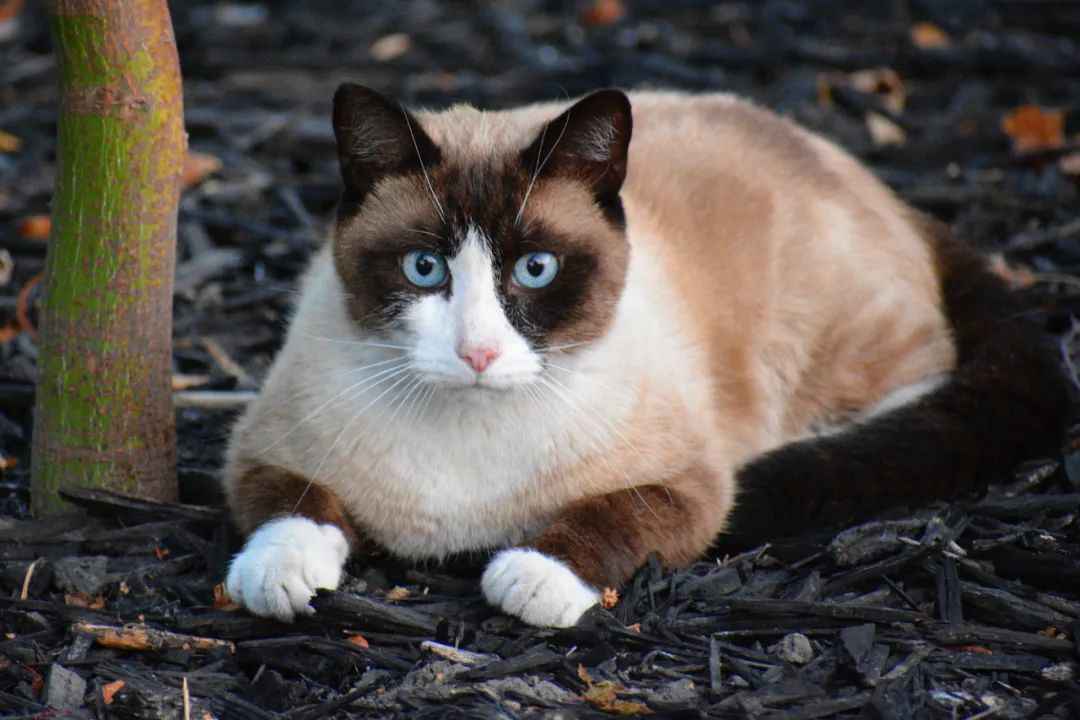
The Snowshoe cat, a striking feline with distinctive white "boots" and piercing blue eyes, has captivated cat lovers since its creation in the 1960s. Developed by breeder Dorothy Hinds-Daugherty in Philadelphia, this breed emerged from a chance discovery: three Siamese kittens with unusual white paws. Hinds-Daugherty crossed these kittens with bicolor American Shorthairs to stabilize the unique markings, naming the breed "Snowshoe" for its snowy-white feet .

Origins and Evolution

Initially met with skepticism, the Snowshoe faced challenges in gaining recognition. Hinds-Daugherty abandoned the program in the 1970s, but breeder Vikki Olander revived it, securing "experimental breed" status from the Cat Fanciers Federation (CFF) and American Cat Association (ACA) in 1974 . By 1983, the breed earned CFF championship status, followed by recognition from The International Cat Association (TICA) in 1993. In the UK, dedicated breeders like Mollie Southall and Maureen Shackell fought to preserve the lineage, achieving full GCCF recognition in 2013 .

Distinctive Features

Snowshoes blend Siamese elegance with American Shorthair robustness. Their short, dense coat features dark "points" (ears, face, legs, tail) contrasting with white paws and a white "V" between the eyes. The breed’s defining trait is its symmetrical white markings, which resemble snowshoes—a result of recessive color-point genes and co-dominant piebald patterns . Blue eyes are a breed standard, ranging from sky blue to deep azure .

Personality and Temperament

Known for their dog-like loyalty, Snowshoes form strong bonds with their human companions. They thrive on interaction, following owners around the house and even greeting them at the door . Intelligent and playful, they enjoy fetch games and climbing, often seeking high perches to observe their surroundings. While sociable with children and other pets, they may become vocal if left alone, inheriting the Siamese’s chatty nature .

Health Considerations

While generally healthy, Snowshoes face hereditary risks. Hypertrophic cardiomyopathy (HCM), a thickening of the heart muscle, is a leading concern, potentially causing heart failure . Polycystic kidney disease (PKD), an inherited condition causing kidney cysts, affects about 5% of the breed . Progressive retinal atrophy (PRA), leading to gradual vision loss, is another genetic risk . Regular veterinary checkups, including echocardiograms and renal ultrasounds, are crucial for early detection .

Rarity and Modern Status

Despite their charm, Snowshoes remain rare due to breeding complexities. The precise white markings are difficult to reproduce consistently, requiring meticulous genetic planning . Breeders worldwide continue to advocate for broader recognition, particularly with the Cat Fanciers’ Association (CFA). Today, Snowshoes are cherished for their unique appearance and affectionate personalities, making them a sought-after choice for families and cat enthusiasts alike .


For those lucky enough to welcome a Snowshoe into their home, the reward is a loyal, vibrant companion that truly stands out in both looks and spirit.

Latest Stories
Feline News2 minute readOriginating from the northwestern United States, the Pixiebob Longhair has captivated cat enthusiasts worldwide with its striking resemblance to the wild bobcat and its loyal, affectionate nature. As the long-haired variant of the Pixiebob breed, this "native new breed"—recognized by The International Cat Association (TICA)—boasts a robust physique, luxurious silky coat, and a uniquely bobbed tail, earning accolades in international cat shows.
Animal Information1 minute readOriginating in Hungary, the Komondor is a muscular large breed renowned as a fearless guardian. Historically tasked with protecting herds from wolves, this agile canine now serves as a devoted family guard dog, blending loyalty with a distinctive appearance that earned it a quirky nickname.
Feline News2 minute readThe Turkish Angora, a breed steeped in history and elegance, has captivated hearts for centuries with its striking appearance and regal demeanor. Originating from Ankara, Turkey (formerly Angora), this ancient longhair breed is believed to be the ancestor of many modern longhaired cats. Once on the brink of extinction, it was saved by dedicated conservation efforts, including a 1930s breeding program initiated by the Turkish government, which focused on preserving the iconic white-coated variety. Today, it stands as a national treasure, celebrated for its beauty and cultural significance.
Animal Information1 minute readThe humphead wrasse (Cheilinus undulatus), a majestic marine species, remains listed as endangered, facing ongoing threats to its survival in global oceans. Renowned for its impressive size, adult individuals can reach a staggering weight of 180 kilograms, making it one of the largest reef-dwelling fish in the world.
Feline News1 minute readThe Balinese cat, also known as the Bali cat or Java cat, is a charming medium - sized long - haired cat. It originated in the United States and is a long - haired mutant of the Siamese cat. It is named the Balinese cat because its movements are 酷似 those of the native Balinese dancers.
Animal Information1 minute readThe global population of Bengal tigers currently stands at approximately 24,000, but a closer look at the figures reveals a worrying reality: only around 3,200 of these majestic creatures live in their natural wild habitats, while nearly 20,000 are in captivity. This stark contrast becomes even more alarming when compared to historical records.
Animal Information1 minute readThe Atossa fritillary (Speyeria adiaste atossa), a butterfly once common in Southern California’s mountain regions, is feared extinct, with no confirmed sightings since 1959. Characterized by its broad wings decorated with elegant black spots, the species once thrived across the area’s rugged landscapes.