The Malayan Tapir: Southeast Asia’s Elusive 'Living Fossil' with a Distinctive Black-and-White Coat


Animal Information
The Malayan Tapir: Southeast Asia’s Elusive 'Living Fossil' with a Distinctive Black-and-White Coat

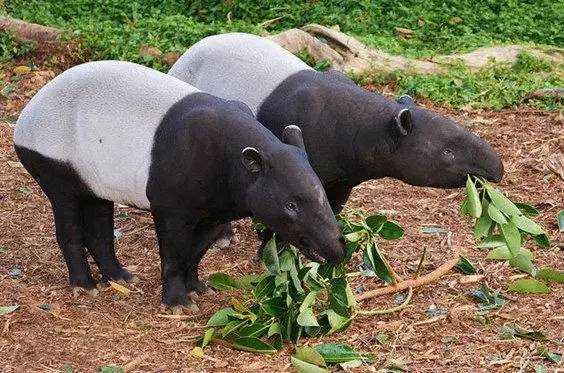
Native to the dense rainforests of Malaysia, Thailand, and Sumatra, the Malayan tapir (Tapirus indicus), also known as the Asian tapir, stands out as one of the region’s most unique and endangered mammals. Recognized by its striking black-and-white coloration and prehensile snout, this large herbivore is often called a "living fossil" due to its ancient lineage and primitive features.

A Bizarre Appearance with Evolutionary Purpose

The Malayan tapir’s most iconic trait is its dual-toned coat: a black back and hindquarters contrast with a white band across the midsection, creating a striking pattern that serves as camouflage in dappled forest light. Growing up to 2.5 meters in length and weighing 250–320 kilograms, it has a stocky build, short legs, and a flexible, elephant-like snout used to grasp leaves, twigs, and fruit. Its small eyes and ears belie acute senses of smell and hearing, while thick skin protects it from thorns and insect bites. As one of five tapir species worldwide, it represents a rare link to prehistoric mammals that roamed the earth millions of years ago.
 
Source: Images from the Internet, if there is any infringement, please contact the removal of


Nocturnal Behavior and Conservation Crisis

Primarily nocturnal, Malayan tapirs spend their days resting in thick vegetation and foraging at night, often near water sources where they swim and wallow to cool off. They play a vital role as "gardeners of the forest," dispersing seeds through their droppings. However, the species is listed as Endangered by the IUCN, with fewer than 3,000 individuals remaining in the wild. Deforestation for palm oil plantations, logging, and infrastructure development have destroyed 80% of their habitat, while poaching for meat and body parts (believed to have medicinal value) compounds the crisis. Road accidents also pose a significant threat, as tapirs often wander onto highways in search of new feeding grounds.

Last Ditch Efforts to Save a Living Fossil

Conservation organizations like the Malayan Tapir Conservation Project work to protect remaining populations through habitat restoration, anti-poaching patrols, and the construction of wildlife corridors. Captive breeding programs in zoos aim to maintain genetic diversity, though reintroducing tapirs to the wild remains challenging. Local communities are increasingly involved in conservation, with initiatives like ecotourism highlighting the tapir’s role in maintaining forest health.


The Malayan tapir’s existence serves as a poignant reminder of Southeast Asia’s vanishing rainforests. Its unique appearance and ancient lineage make it a symbol of biodiversity worth fighting for, but urgent action is needed to prevent this "living fossil" from disappearing within a generation. As deforestation continues, the tapir’s black-and-white form may soon become a ghost of the forest—unless global efforts align to preserve its fragile habitat.
Latest Stories
Feline News2 minute readOriginating from the northwestern United States, the Pixiebob Longhair has captivated cat enthusiasts worldwide with its striking resemblance to the wild bobcat and its loyal, affectionate nature. As the long-haired variant of the Pixiebob breed, this "native new breed"—recognized by The International Cat Association (TICA)—boasts a robust physique, luxurious silky coat, and a uniquely bobbed tail, earning accolades in international cat shows.
Animal Information1 minute readOriginating in Hungary, the Komondor is a muscular large breed renowned as a fearless guardian. Historically tasked with protecting herds from wolves, this agile canine now serves as a devoted family guard dog, blending loyalty with a distinctive appearance that earned it a quirky nickname.
Feline News2 minute readThe Turkish Angora, a breed steeped in history and elegance, has captivated hearts for centuries with its striking appearance and regal demeanor. Originating from Ankara, Turkey (formerly Angora), this ancient longhair breed is believed to be the ancestor of many modern longhaired cats. Once on the brink of extinction, it was saved by dedicated conservation efforts, including a 1930s breeding program initiated by the Turkish government, which focused on preserving the iconic white-coated variety. Today, it stands as a national treasure, celebrated for its beauty and cultural significance.
Animal Information1 minute readThe humphead wrasse (Cheilinus undulatus), a majestic marine species, remains listed as endangered, facing ongoing threats to its survival in global oceans. Renowned for its impressive size, adult individuals can reach a staggering weight of 180 kilograms, making it one of the largest reef-dwelling fish in the world.
Feline News1 minute readThe Balinese cat, also known as the Bali cat or Java cat, is a charming medium - sized long - haired cat. It originated in the United States and is a long - haired mutant of the Siamese cat. It is named the Balinese cat because its movements are 酷似 those of the native Balinese dancers.
Animal Information1 minute readThe global population of Bengal tigers currently stands at approximately 24,000, but a closer look at the figures reveals a worrying reality: only around 3,200 of these majestic creatures live in their natural wild habitats, while nearly 20,000 are in captivity. This stark contrast becomes even more alarming when compared to historical records.
Animal Information1 minute readThe Atossa fritillary (Speyeria adiaste atossa), a butterfly once common in Southern California’s mountain regions, is feared extinct, with no confirmed sightings since 1959. Characterized by its broad wings decorated with elegant black spots, the species once thrived across the area’s rugged landscapes.