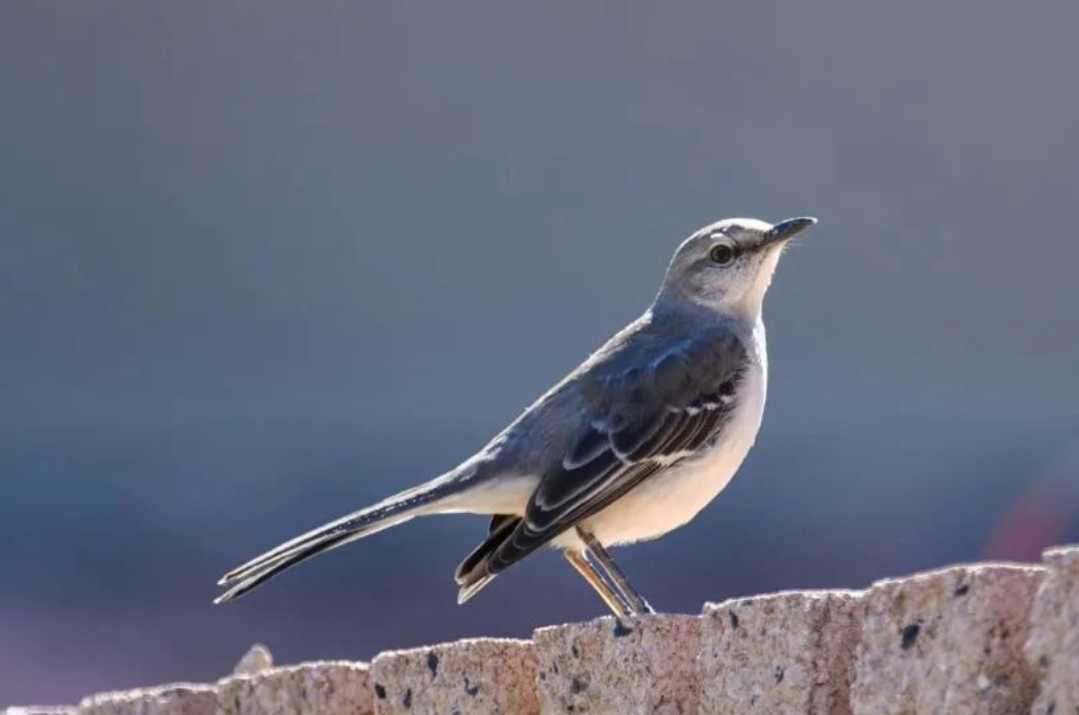
The Enigmatic Northern Mockingbird: A Master of Imitation


Bird Information
The Enigmatic Northern Mockingbird: A Master of Imitation

The Northern Mockingbird (Mimus polyglottos) is a captivating bird that has long intrigued birdwatchers and nature enthusiasts across the Americas. Renowned for its extraordinary ability to mimic a vast array of sounds, this species adds a unique charm to the ecosystems it inhabits.


Measuring around 23 - 28 centimeters in length, the Northern Mockingbird sports a sleek, gray - brown plumage on its upperparts, which blends well with its surroundings. Its underparts are a lighter shade, often white or pale gray. The wings and tail feature bold white patches that are particularly conspicuous during flight, creating a striking visual display. A slender, slightly curved bill allows it to deftly capture insects, one of its primary food sources. In addition to insects like beetles, ants, and grasshoppers, it also feasts on berries, seeds, and even small fruits, making it an omnivore with a diverse diet.


Native to North America, Central America, and the Caribbean, these mockingbirds are highly adaptable when it comes to habitats. They thrive in open areas such as residential neighborhoods, farmlands, and city parks, as well as in more natural settings like forest edges and brushy deserts. Their preference for areas with scattered trees and shrubs provides them with both perching spots to defend their territory and places to build their nests. These cup - shaped nests, constructed from twigs, leaves, and grass, are usually hidden within the foliage of trees or shrubs.


However, what truly sets the Northern Mockingbird apart is its remarkable vocal ability. Males, in particular, are known for their elaborate songs, which are a medley of imitations. They can mimic the calls of other birds, the sounds of insects, and even mechanical noises like car alarms or creaking gates. A single mockingbird may have a repertoire of over 200 different sounds, and it repeats each phrase several times before moving on to the next. This mimicry serves multiple purposes, from attracting mates to establishing and defending territory. They are also known to be fiercely territorial, often swooping down and attacking intruders, including larger birds and even humans, if they feel their nests or territory are threatened.


Despite facing some challenges such as habitat loss due to urbanization and predation by cats, the Northern Mockingbird remains a relatively common sight in many parts of its range. As a symbol of adaptability and vocal prowess, it continues to enchant those lucky enough to observe and listen to its complex and ever - changing melodies.

Latest Stories
Feline News2 minute readOriginating from the northwestern United States, the Pixiebob Longhair has captivated cat enthusiasts worldwide with its striking resemblance to the wild bobcat and its loyal, affectionate nature. As the long-haired variant of the Pixiebob breed, this "native new breed"—recognized by The International Cat Association (TICA)—boasts a robust physique, luxurious silky coat, and a uniquely bobbed tail, earning accolades in international cat shows.
Animal Information1 minute readOriginating in Hungary, the Komondor is a muscular large breed renowned as a fearless guardian. Historically tasked with protecting herds from wolves, this agile canine now serves as a devoted family guard dog, blending loyalty with a distinctive appearance that earned it a quirky nickname.
Feline News2 minute readThe Turkish Angora, a breed steeped in history and elegance, has captivated hearts for centuries with its striking appearance and regal demeanor. Originating from Ankara, Turkey (formerly Angora), this ancient longhair breed is believed to be the ancestor of many modern longhaired cats. Once on the brink of extinction, it was saved by dedicated conservation efforts, including a 1930s breeding program initiated by the Turkish government, which focused on preserving the iconic white-coated variety. Today, it stands as a national treasure, celebrated for its beauty and cultural significance.
Animal Information1 minute readThe humphead wrasse (Cheilinus undulatus), a majestic marine species, remains listed as endangered, facing ongoing threats to its survival in global oceans. Renowned for its impressive size, adult individuals can reach a staggering weight of 180 kilograms, making it one of the largest reef-dwelling fish in the world.
Feline News1 minute readThe Balinese cat, also known as the Bali cat or Java cat, is a charming medium - sized long - haired cat. It originated in the United States and is a long - haired mutant of the Siamese cat. It is named the Balinese cat because its movements are 酷似 those of the native Balinese dancers.
Animal Information1 minute readThe global population of Bengal tigers currently stands at approximately 24,000, but a closer look at the figures reveals a worrying reality: only around 3,200 of these majestic creatures live in their natural wild habitats, while nearly 20,000 are in captivity. This stark contrast becomes even more alarming when compared to historical records.
Animal Information1 minute readThe Atossa fritillary (Speyeria adiaste atossa), a butterfly once common in Southern California’s mountain regions, is feared extinct, with no confirmed sightings since 1959. Characterized by its broad wings decorated with elegant black spots, the species once thrived across the area’s rugged landscapes.