Stellar Nurseries and Cosmic Collisions: Webb and Rubin Telescopes Unveil Galactic Secrets


Astro Information
Stellar Nurseries and Cosmic Collisions: Webb and Rubin Telescopes Unveil Galactic Secrets

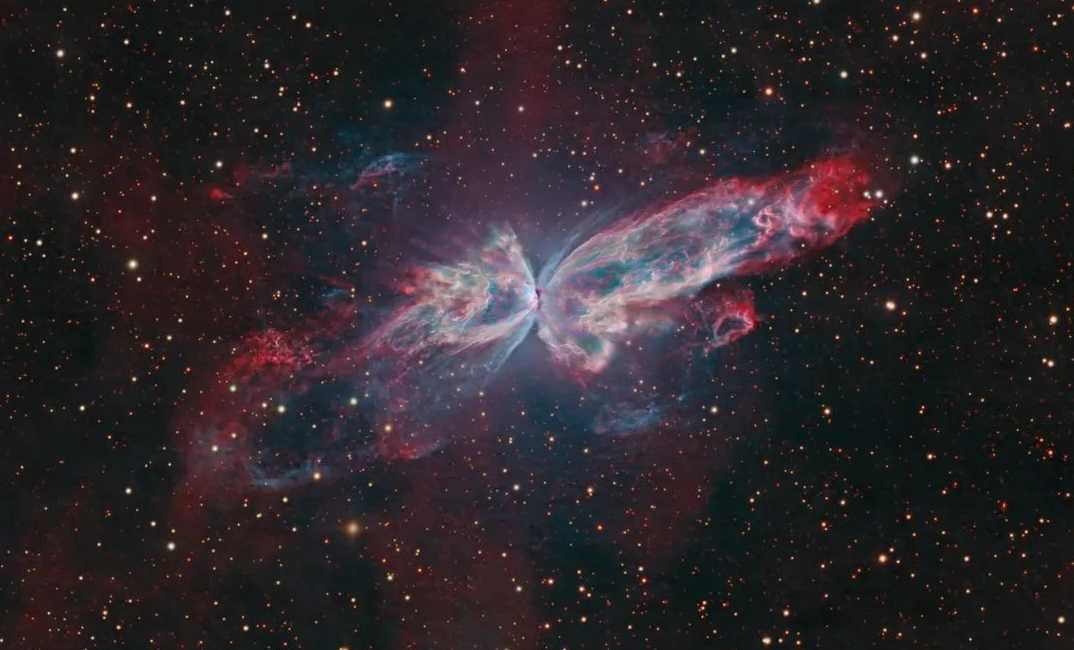
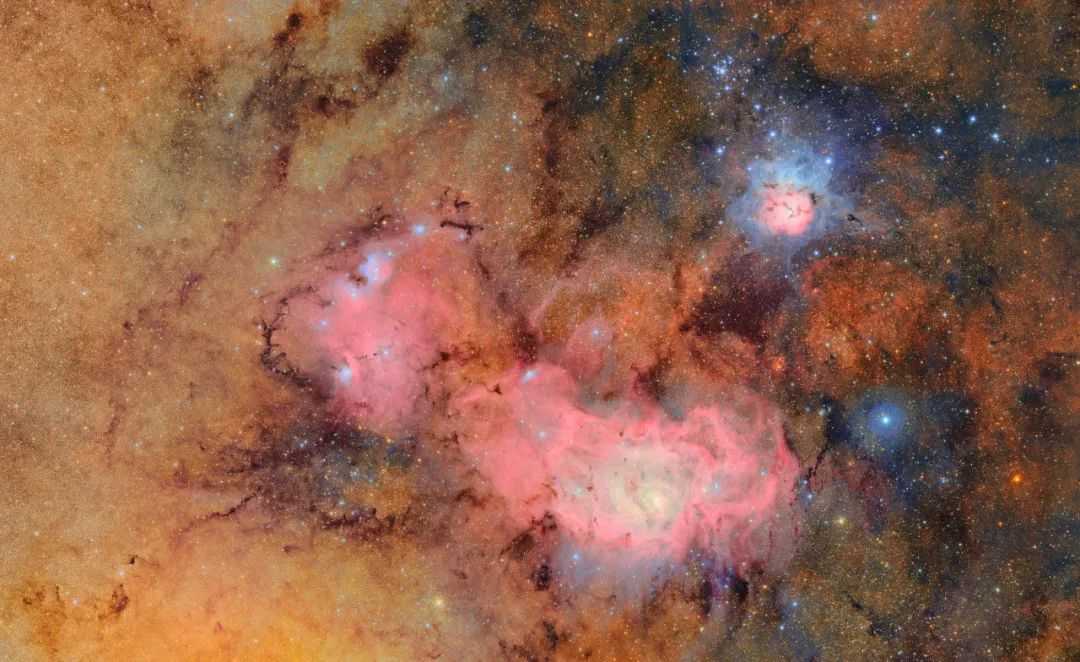
Astronomers have unveiled two groundbreaking images capturing the dynamic interplay of star formation and galaxy evolution. The first, a composite of the Trifid and Lagoon Nebulae, combines 678 individual exposures taken over just seven hours by the Vera C. Rubin Observatory’s 3.2-billion-pixel camera. This unprecedented resolution reveals intricate gas and dust structures in these stellar nurseries, where new stars are born from collapsing molecular clouds.

The Trifid and Lagoon Nebulae: Cosmic Laboratories of Star Birth

Located thousands of light-years away in Sagittarius, the Trifid and Lagoon Nebulae are iconic stellar nurseries where gravity sculpts gas and dust into glowing pillars and turbulent clouds12. Rubin’s telescopic "movie-like" imaging10, achieved through rapid-fire exposures and advanced data processing, resolves faint structures previously hidden. For instance, the nebulae’s pink hues stem from ionized hydrogen gas energized by newborn stars, while dark lanes of dense dust obscure protostars still forming deep within56.


The telescope’s 3200-megapixel camera, equivalent to 400 8K TVs, enables such precision1. By combining images across four filters, astronomers teased out subtle variations in temperature and chemical composition. This technical feat underscores Rubin’s role in shifting astronomy from static snapshots to dynamic, time-lapse studies of the universe210.

Virgo Cluster: A Theater of Galactic Mergers and Interactions

The Virgo Cluster image, part of Rubin’s test observations, offers a glimpse into the chaotic dance of galaxies. Three merging systems dominate the scene, their interactions triggering intense starbursts and creating tidal tails of gas and stars37. For example, one spiral galaxy pair (lower right) shows distorted arms, while a trio of merging ellipticals (upper right) exhibits shockwaves from colliding plasma110.


Foreground stars from the Milky Way add depth, appearing as bright pinpricks against the backdrop of distant clusters. These interactions are not isolated events: the Virgo Cluster’s gravity accelerates galaxies to thousands of kilometers per second, stripping gas through "ram pressure" and stifling star formation34. Such processes, observed here in vivid detail, provide clues to how galaxies evolve over billions of years.


Looking ahead, the James Webb Space Telescope will complement Rubin’s data by probing the nebulae’s infrared emissions to study protostars and exoplanetary disks9. Meanwhile, Rubin’s decade-long "Legacy Survey of Space and Time" will monitor 200 billion galaxies, capturing transient phenomena like supernovae and dark matter-driven lensing110. Together, these tools are rewriting our understanding of cosmic evolution—from the birth of stars in glowing nebulae to the cataclysmic mergers that reshape entire galaxies.

Latest Stories
Feline News2 minute readOriginating from the northwestern United States, the Pixiebob Longhair has captivated cat enthusiasts worldwide with its striking resemblance to the wild bobcat and its loyal, affectionate nature. As the long-haired variant of the Pixiebob breed, this "native new breed"—recognized by The International Cat Association (TICA)—boasts a robust physique, luxurious silky coat, and a uniquely bobbed tail, earning accolades in international cat shows.
Animal Information1 minute readOriginating in Hungary, the Komondor is a muscular large breed renowned as a fearless guardian. Historically tasked with protecting herds from wolves, this agile canine now serves as a devoted family guard dog, blending loyalty with a distinctive appearance that earned it a quirky nickname.
Feline News2 minute readThe Turkish Angora, a breed steeped in history and elegance, has captivated hearts for centuries with its striking appearance and regal demeanor. Originating from Ankara, Turkey (formerly Angora), this ancient longhair breed is believed to be the ancestor of many modern longhaired cats. Once on the brink of extinction, it was saved by dedicated conservation efforts, including a 1930s breeding program initiated by the Turkish government, which focused on preserving the iconic white-coated variety. Today, it stands as a national treasure, celebrated for its beauty and cultural significance.
Animal Information1 minute readThe humphead wrasse (Cheilinus undulatus), a majestic marine species, remains listed as endangered, facing ongoing threats to its survival in global oceans. Renowned for its impressive size, adult individuals can reach a staggering weight of 180 kilograms, making it one of the largest reef-dwelling fish in the world.
Feline News1 minute readThe Balinese cat, also known as the Bali cat or Java cat, is a charming medium - sized long - haired cat. It originated in the United States and is a long - haired mutant of the Siamese cat. It is named the Balinese cat because its movements are 酷似 those of the native Balinese dancers.
Animal Information1 minute readThe global population of Bengal tigers currently stands at approximately 24,000, but a closer look at the figures reveals a worrying reality: only around 3,200 of these majestic creatures live in their natural wild habitats, while nearly 20,000 are in captivity. This stark contrast becomes even more alarming when compared to historical records.
Animal Information1 minute readThe Atossa fritillary (Speyeria adiaste atossa), a butterfly once common in Southern California’s mountain regions, is feared extinct, with no confirmed sightings since 1959. Characterized by its broad wings decorated with elegant black spots, the species once thrived across the area’s rugged landscapes.